
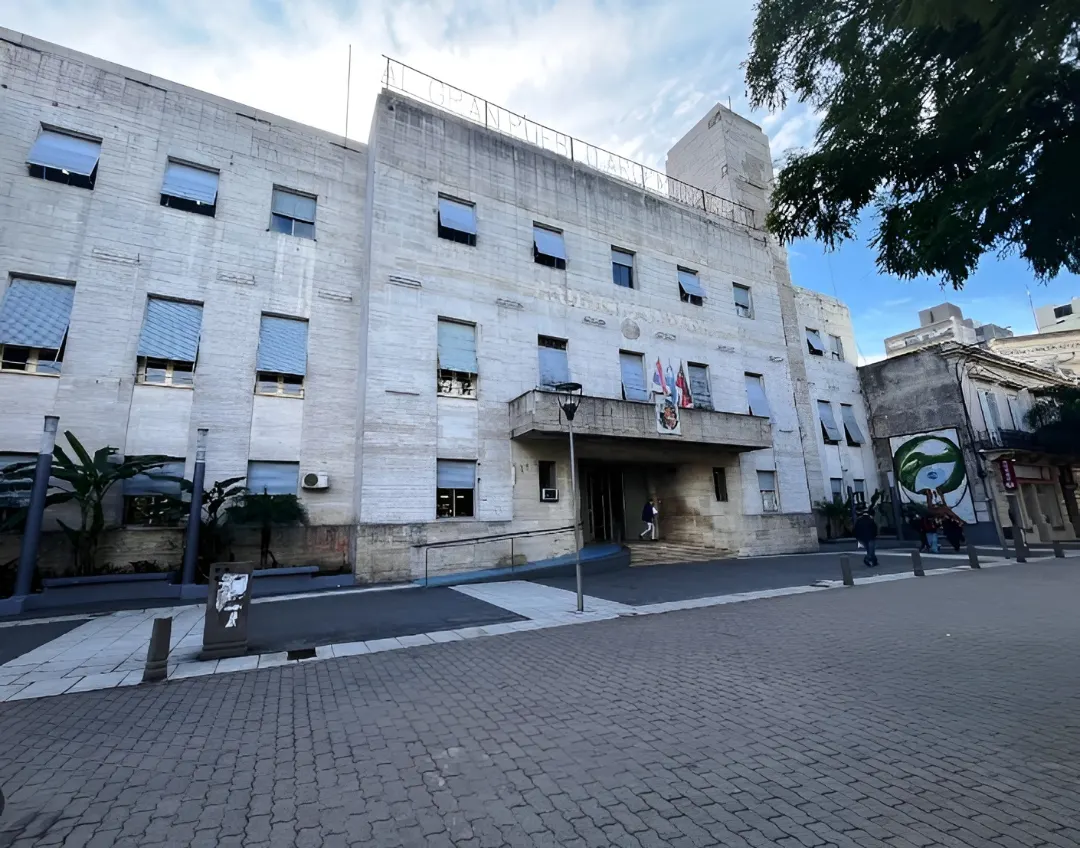
The Deliberative Council of Concordia held this Thursday its twentieth ordinary session, a day marked by intense debate and the approval of important initiatives. Under the presidency of the 1st vice-president, Dr. Felipe Sastre, the legislative body addressed a total of twenty-seven administrative case files. The session was also attended by students from the "Vélez Sarsfield" Secondary School.
Felipe Sastre and politics as a service
At the conclusion of the session, the acting president, Felipe Sastre, referred to the role of the Council. He highlighted that its function is to maintain impartiality and objectivity, a value that, according to him, he has maintained throughout his career. Sastre also valued the presence of the students from the "Vélez Sarsfield" School, whom he urged to see politics as a "tool for transformation" and not just as a space for conflict. Finally, it was reported that the councilors Verónica del Boca and Javier Aguilar were appointed as members of the Council for the Elderly, concluded Sastre.
Controversy over a communication minute
One of the moments of greatest tension of the day arose from a communication minute presented by the Justicialist bloc. The councilor Guillermo Satalía Méndez proposed that the Council express itself regarding the statements of the candidate for senator Alberto "Bertie" Benegas Lynch, but the initiative was rejected. Satalía Méndez criticized the decision, accusing the ruling party of a "misinterpretation" of the regulations. She explained that the minute is the appropriate instrument to express a position, unlike a resolution that requests a concrete action. "We did not have the support because we do not have a majority," she concluded.
Consensus on education and health issues
Despite the controversy, the Council showed broad consensus on other issues of great relevance to the community. Several resolution projects were approved that received the support of the councilors, among them:
Tributes and criticisms of the national government
The Justicialist bloc took advantage of the tribute space to celebrate the veto of the president Javier Milei to the Disability Emergency Law, although it questioned the position of the legislator from Entre Ríos, Atilio Benedetti, who did not support the vote.
The councilors Claudia Villalba and Carolina Amiano focused on the statements of a national deputy of the PRO from Córdoba, whom they accused of discrimination in relation to the care of children at the Garrahan Hospital, a fact that, according to them, "cannot be overlooked." In contrast, councilor Yaiza Pessolani Bechet defended the position of the national government. For her part, councilor Villalba paid tribute to the Female Footballer on her day.
Felipe Sastre and politics as a service
At the conclusion of the session, the acting president, Felipe Sastre, referred to the role of the Council. He highlighted that its function is to maintain impartiality and objectivity, a value that, according to him, he has maintained throughout his career. Sastre also valued the presence of the students from the "Vélez Sarsfield" School, whom he urged to see politics as a "tool for transformation" and not just as a space for conflict. Finally, it was reported that the councilors Verónica del Boca and Javier Aguilar were appointed as members of the Council for the Elderly, concluded Sastre.
Controversy over a communication minute
One of the moments of greatest tension of the day arose from a communication minute presented by the Justicialist bloc. The councilor Guillermo Satalía Méndez proposed that the Council express itself regarding the statements of the candidate for senator Alberto "Bertie" Benegas Lynch, but the initiative was rejected. Satalía Méndez criticized the decision, accusing the ruling party of a "misinterpretation" of the regulations. She explained that the minute is the appropriate instrument to express a position, unlike a resolution that requests a concrete action. "We did not have the support because we do not have a majority," she concluded.
Consensus on education and health issues
Despite the controversy, the Council showed broad consensus on other issues of great relevance to the community. Several resolution projects were approved that received the support of the councilors, among them:
- Tribute to secondary schools: At the proposal of the councilor Silvina Ovelar, the 25th anniversary of 18 secondary schools of the city, founded in the year 2000, was declared of Municipal Interest. A diploma will be delivered to each institution in recognition of their work. institutions to the educational and community sphere. Among the schools recognized for their work are N° 18 "Vélez Sarsfield", N° 19 "Juana Azurduy", N° 20 "Simón Bolívar", N° 21 "Aurora de Yeruá", N° 22 "Mariano Moreno", N° 23 "República Oriental del Uruguay", N° 24 "Cabildo Abierto", N° 25 "General San Martín", N° 26 "General Manuel Olazábal", N° 27 "Domingo Liotta", N° 30 "María Elena Walsh", N° 31 "Benito Juárez", N° 32 "Osvaldo Magnasco", N° 33 "Justa Gayoso", N° 34 "Carlos Villamil", N° 35 "Cabo Primero Sendrós", N° 36 "Juana Manso", and N° 37 "Ernesto Che Guevara". The act not only represents a recognition of the path traveled, but also a commitment to the future of education in Concordia, the legislative body stressed.
- Palliative Care: The councilor Claudia Villalba achieved the approval of a project that declares of Municipal Interest the 3rd Palliative Care Conference, which will be held on September 26 at the Masvernat Hospital. The event, organized by the Palliative Care Unit and the Ministry of Health, seeks to train professionals for more comprehensive and dignified care.
- Handball Tournament: The councilor Eliana Lagraña presented and obtained the approval of an initiative that declares of Municipal Sports Interest the National Handball Tournament Phase I Cadet Category, which will be held in the city from August 22 to 24.
Tributes and criticisms of the national government
The Justicialist bloc took advantage of the tribute space to celebrate the veto of the president Javier Milei to the Disability Emergency Law, although it questioned the position of the legislator from Entre Ríos, Atilio Benedetti, who did not support the vote.
The councilors Claudia Villalba and Carolina Amiano focused on the statements of a national deputy of the PRO from Córdoba, whom they accused of discrimination in relation to the care of children at the Garrahan Hospital, a fact that, according to them, "cannot be overlooked." In contrast, councilor Yaiza Pessolani Bechet defended the position of the national government. For her part, councilor Villalba paid tribute to the Female Footballer on her day.