
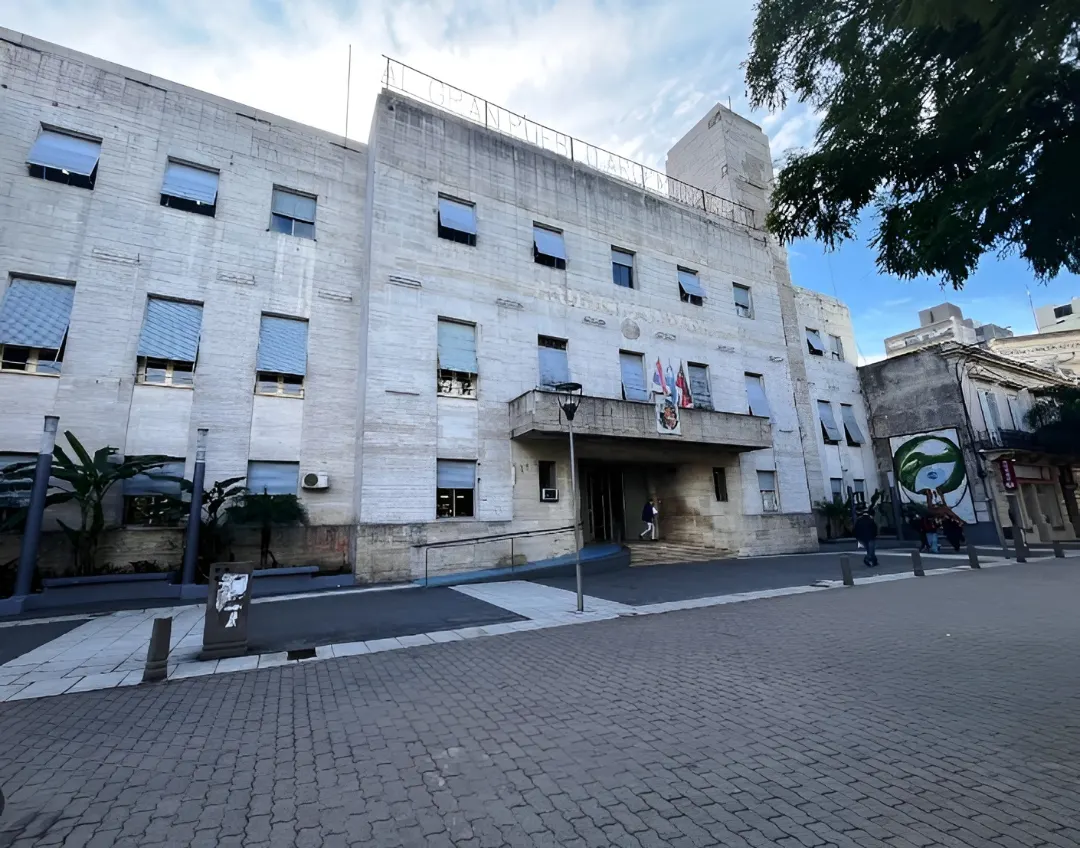
The activity took place in the Assembly Hall of the Municipality of Concordia and was attended by the Undersecretary of Health, Florencia Prieto, the Director of Preventive Management, Yanina Techera, and the Director of Disability and Rehabilitation, Valeria Sciammarella.
The initiative was born from sign language interpreter Silvina Helber, who was also in charge of providing the interpretation for it. As Sciammarella detailed, “the workshop arose from a concern of Silvina’s, since she has a telephone line through which she communicates with the deaf community, and they always ask her for advice or interventions when they need to carry out a procedure. Through video calls, she interprets for these individuals, and that is where the need to hold this workshop stems from.”
The organization of the meeting was a joint effort between the Directorate of Disability and Rehabilitation and the Directorate of Preventive Management of the Municipality of Concordia. Likewise, the organizers highlighted that the purpose of the workshop was to deepen knowledge and care of the body and the prevention of STIs (Sexually Transmitted Infections).
In this regard, the Undersecretary of Health, Florencia Prieto, pointed out that it was a very positive moment. From the Preventive Management area, we are trying to reach populations that do not have access to the information they require. We already work with older adults, and in this case, we are doing so with women with a certain degree of hearing loss or deafness. A meeting was held, which was made possible by the role of the translator, Silvina Heber. There was a lot of exchange; it was clearly necessary to create this space so that they could ask questions, raise the difficulties they have in accessing medical care, share their experiences, and also receive training, especially on all aspects of their health care. That is why we want it to be known that this space will be available from now on for all those who wish to participate in the future.”
For her part, Florencia Stechina, coordinator of the Sexual Diversity area, highlighted the importance of creating these meetings where training is provided and communication is made accessible. “Often, women need to get informed or go to medical consultations and require the accompaniment of an interpreter, and it is good that they can have self-knowledge and have what they need.”
Finally, Eloisa Azanza, coordinator of the Sexually Transmitted Infections area, highlighted that in addition to talking about sexuality and reproductive health, “we were able to make progress in overcoming communication barriers on very important issues, such as access to the health system, and also to provide tools and all the information that is available and that they need. It is a goal of the Directorate of Preventive Management that we are oriented toward achieving citizens' access to their rights, because we are committed to an autonomous, informed citizenry that is responsible for its health.”