
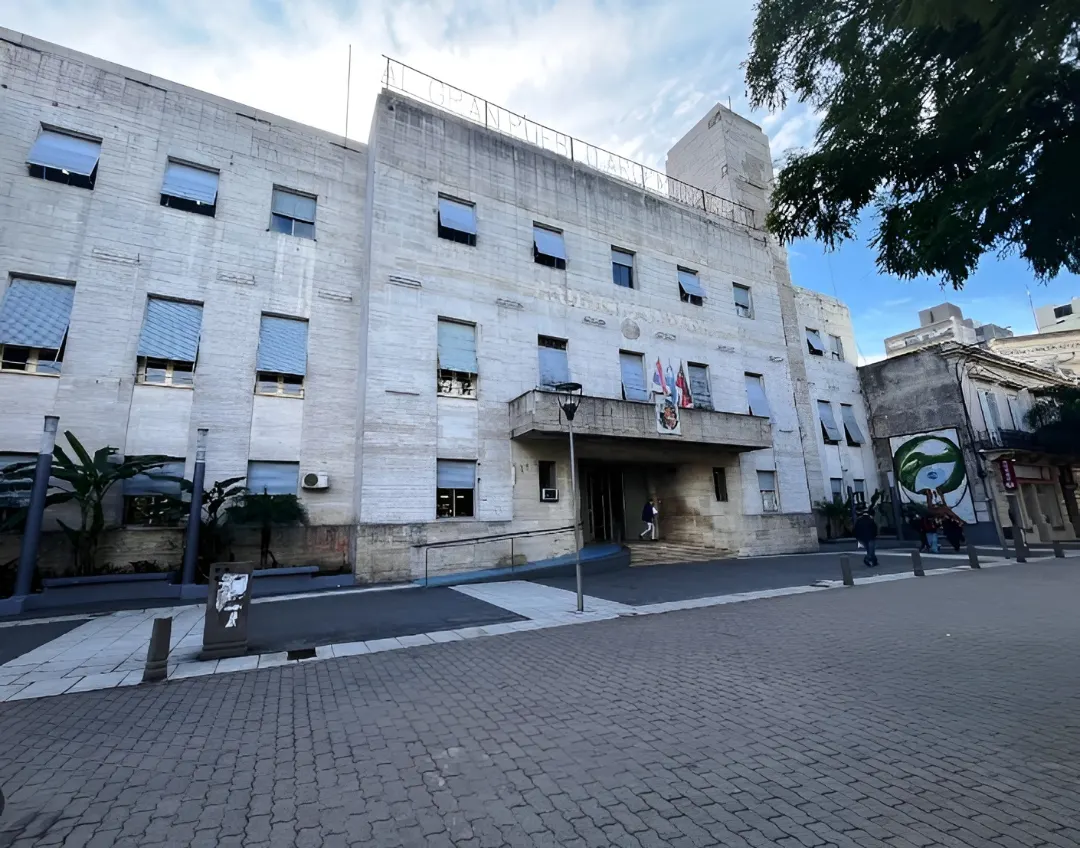
Members of the Municipal Cabinet and the Faculty of Administration Sciences of the National University of Entre Ríos took part in it. “You cannot transform what you do not know, and to develop projects that are sustainable, you must first manage information,” highlighted the Mayor.
During this Monday morning, Mayor Francisco Azcué led a work meeting within the framework of the Sustainable City program carried out by the Faculty of Administration Sciences of the National University of Entre Ríos (UNER).
During the meeting, the first steps achieved in Concordia with a projection towards 2025 were analyzed.
The project on sustainable cities includes the implementation of a system of social responsibility and sustainability (RSyS) indicators for local governments in the Uruguay River corridor, in the province of Entre Ríos.
To achieve this objective, the analysis of the main reference frameworks regarding measurement and communication was used, as well as consultation with expert references and the investigation of the information systems of the municipalities of said corridor, in this case, that of Concordia.
Present were the Secretary of Cabinet Coordination and Treasury Pablo Ferreyra; the Secretary of Productive Development Federico Schattenhofer; the Undersecretary of Environment Constanza Montoreano, as well as representatives from the Tourism area. For the Faculty of Administration Sciences, researcher and professor Fabián Tisocco was present.
TOOLS
Azcué highlighted the importance of the initiative, since it “allows us to have tools and data for a sustainable development of the city, backed by premises that are important to maintain in all public policies,” remarking that “you cannot transform what you do not know, and to develop projects that are sustainable, you must first manage information.”
In that sense, the Mayor highlighted the presence of several areas of the local government, since to achieve the objectives there must be articulated work between Production, Environment, Tourism, and the University “that is applied in concrete actions that mean a change in the lives of our residents.”
For his part, Tisocco first thanked the open-door policy of the current municipal administration, stressing that “the academic sector cannot be isolated; it must necessarily work in an articulated manner,” anticipating that what is sought for next year “are results that translate into concrete impacts within different areas.”