
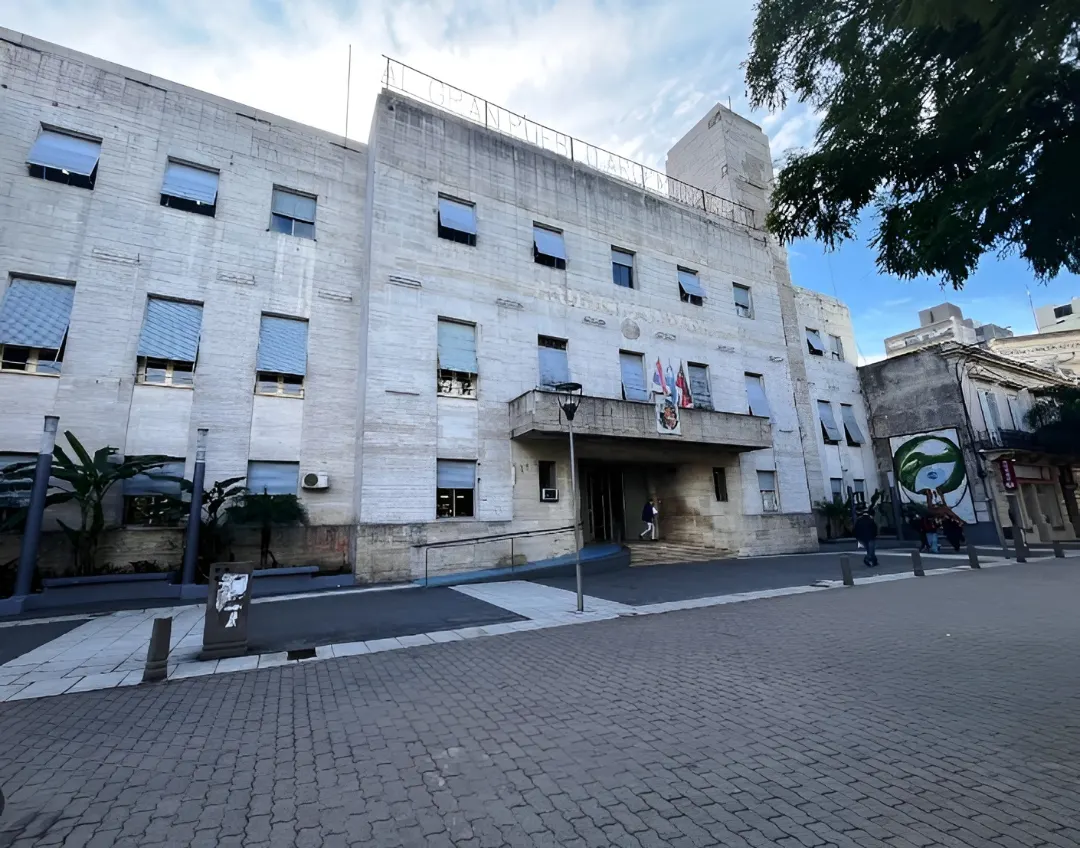
It was carried out within the framework of the Comprehensive Care Program for People Experiencing Homelessness that the provincial ministry is developing throughout the Entre Ríos territory. “It is an issue that we have been working on since the beginning of the administration, but it requires a comprehensive approach between different areas,” stated Mayor Francisco Azcué.
During this Thursday, the Provincial Ministry of Human Development, within the framework of the Comprehensive Care Program for People Experiencing Homelessness and through the Secretariat of Social Policy Coordination, carried out a training session in our city aimed at strengthening the interdisciplinary approach to this problem.
The initiative is financed by the Federal Council of Investments (CFI) and seeks to optimize social intervention throughout the province. Representatives from the municipalities of San Salvador, Federación, Federal, Feliciano, and Colón were present.
Mayor Francisco Azcué highlighted the different public policies that have been worked on jointly with the Provincial Government, as in this case with the Ministry of Human Development, remarking that since the beginning of the administration “we have been addressing these situations, implementing different programs.”
“This is a complex problem that has several causes that converge, therefore it requires a comprehensive approach, from all areas and from different competencies.”
For this reason, “these training instances are important to have an action protocol that is common for the entire province. Concordia is a city that, due to poverty and indigence rates, has high levels of people in situations of extreme vulnerability, which is why it is essential to have tools that allow us to improve what has been done and optimize resources,” affirmed Azcué.
Ricardo Vales, Provincial Secretary of Social Policy Coordination, explained that “the training sessions have an action protocol and aim to train each of the officials from different municipalities, boards, and communes. There are many situations that have to do with diverse problems, where families, elderly people, or minors are involved, and for that, it is necessary to have the knowledge and elements that allow addressing them.”
For his part, the Secretary of Human Development, Sebastián Arístide, said that to work on this problem, “first you have to understand what it is about. It is not something specifically local and it goes through different stages, and that is where we have to make a good diagnosis, reach an agreement, share knowledge, and generate work methodologies together with the institutions.”