
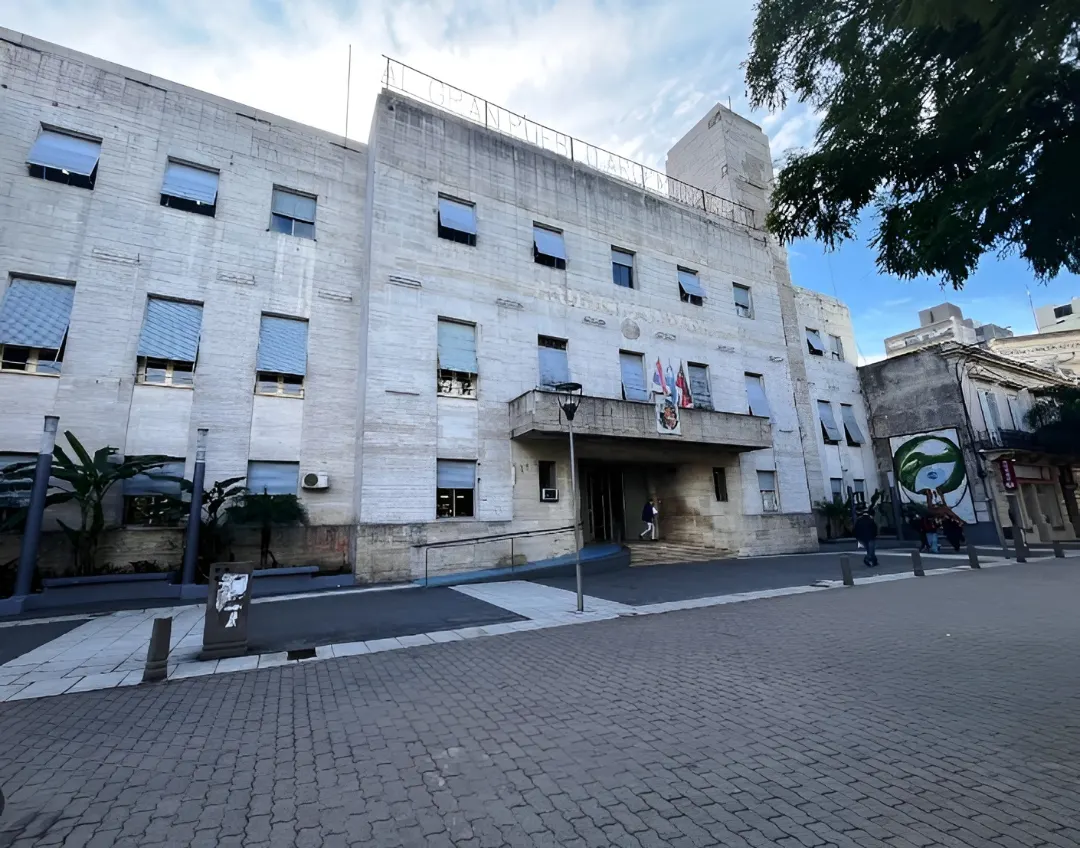
The Undersecretariat of Environment conducted training on preventive strategies in recreational waters for lifeguards, within the framework of the Water Quality Surveillance and Monitoring Plan for beaches carried out by the Municipality of Concordia.
During the session, work was done on algal blooms and preventive campaigns, with the aim of strengthening knowledge and early detection of these phenomena; and water monitoring and control (Provincial Resolution No. 84/07), which regulates the use of bathing waters for recreational activities.
In this regard, Eng. Paola Sinner, from the Technical Department of the Undersecretariat of Environment, stated that “we spoke about preventive measures regarding the quality of water for recreational use such as beaches, rivers, and swimming pools. All of this in relation to algal blooms, bacteria, and microorganisms found in the river and their levels. It should be noted that we rely on provincial regulations and resolutions to carry out the beach monitoring and surveillance plan.”
Martín Novoa, specialist in algal blooms and Director of GISAe and the Water and Effluents Laboratory of the National University of Entre Ríos (UNER), for his part, pointed out that “lifeguards are the ones in contact with the water and the people, given that the problem of algae is already in the region and the ideal is to prevent, train, and teach people about the danger or potential danger that could exist for their health.”
Franco Álvarez and Luis Penco, lifeguards and members of SUGARA, maintained that “for us, these instances are important since we have rarely had training related to the river. It is fundamental to have knowledge of these topics because we are the first informants to the citizen and tourists. The more agents are trained and involved in what has to do with aquatic safety in beach recreation spaces, the better it will be for the people who enjoy the summer, whether they are residents or tourists.”
The Municipality of Concordia, through the Water Quality Surveillance and Monitoring Plan for authorized beaches and high-traffic areas, complementing the work carried out by the Administrative Commission of the Uruguay River (CARU), performs weekly monitoring with sampling to evaluate different microbiological parameters of pathogens and visual observation for algal blooms.