
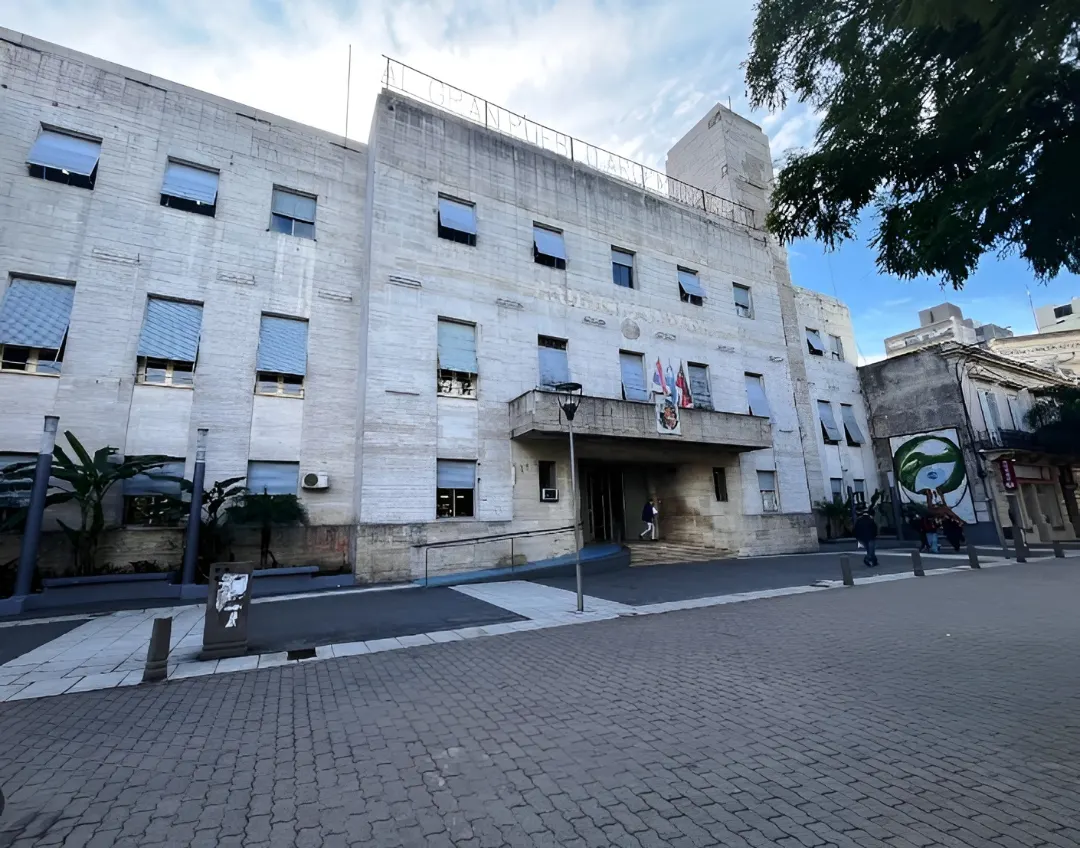
Within the framework of the work that the municipal Executive has been developing with different institutions of the city, this Friday the ratification of an agreement was carried out, which aims to collaborate in the fight against this disease that affects citrus farming, through permanent monitoring.
The Association of Citrus Growers of Concordia has among its actions the collaboration with government agencies, both public and private, in the fight against citrus pests and diseases. Within the framework of these actions, they have decided to coordinate efforts and collaborate mutually with the Municipality of Concordia to prevent the establishment of HLB in the area, a disease that affects production and consequently can cause damage to one of the main productive sectors of the department.
Through this agreement, the Municipality grants the Association of Citrus Growers of Concordia a contribution that will be destined and aimed at covering the expenses and fees inherent to the HLB monitoring that the Association has been carrying out in the city. It is worth noting that through this action, the presence of the vector that transmits the disease has been avoided.
When referring to this signing, the Secretary of Productive Development, Federico Schattenhofer, pointed out: “We have effectively completed this agreement, which we were very interested in being able to continue. We understand that it is a campaign that is being carried out and coordinated with the Association of Citrus Growers; it deserves all the support of the State, since it has to do with taking care of local production, protecting ourselves from a pest, from a disease that, if it were to occur, could cause a lot of damage to local production. In this sense, by directive of the mayor Azcué, it was decided to support this initiative”.
IMPORTANCE OF MONITORING
For his part, the president of the Association of Citrus Growers, Walter Silva Müller, expressed his satisfaction upon signing this agreement: “As an association, we have been working on this program for more than 5 years, and the truth is that we value the predisposition of the Municipality and the new administration very much. We talked, and they understood the situation, the risk of this disease, and the importance of giving continuity to this monitoring work, which is the most efficient way to prevent this disease. Monitoring, to find it quickly if it ever appears and in that way avoid the spread of the disease,” noted the institution's representative.
He assured that “having this starting point, which is being an area free of these diseases, and that the producer feels the peace of mind that they can continue growing citrus without risk to their production, opens the door for the future, which presents itself as very auspicious for the activity, with prospects of interesting markets opening up, with a possibility of export and with possibilities of selling fruit for juice with good values. This is the initial kick-off so that all that can be fulfilled, so from now on, the truth is that I am very grateful to the new administration, which has been accompanying us from the first day.”
STRENGTHENING THE ROLE OF INSTITUTIONS FOR THE PRODUCTIVE DEVELOPMENT OF THE CITY
Silva Müller also pointed out that as an institution we will also work on our role, which is the training of the workforce, of the personnel, attending to the needs of the harvesters, the pruners, the workers in general, which is another point that we are going to address together with the State from now on, but always starting from a citrus industry with healthy plants and with an activity that is sustainable over time.”
“Citrus farming, like all intensive activities such as blueberries, forestry, and pecans, are activities that generate and demand labor, mainly from Concordia. Many people are employed, generating a chain in which all actors are very important: the producer, the harvesters, those who provide services. That is why it is important to work to sustain all these jobs.”