
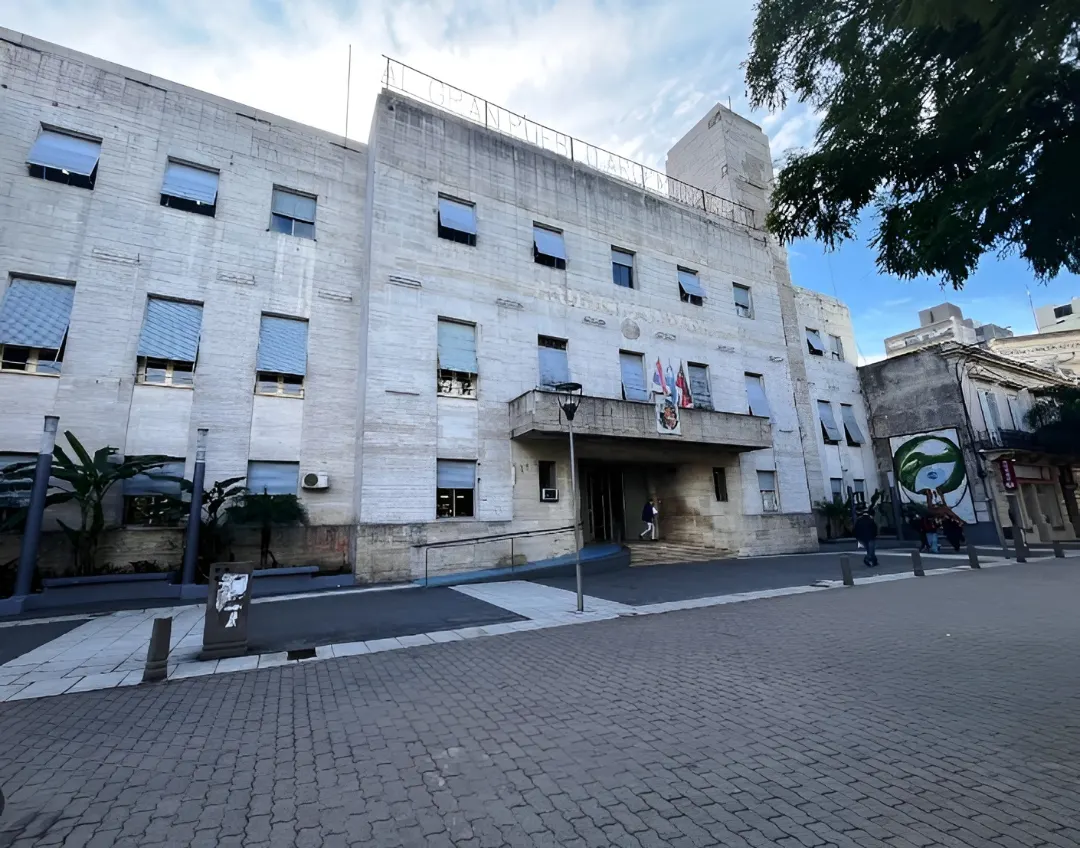
On Monday morning, mayor Francisco Azcué was present at the Basic Fire Management Course, organized by the Health Secretariat of the Municipality of Concordia and attended by the National Fire Management Service.
Municipal personnel who are part of the Civil Forest Brigade, under the Health Secretariat, participated in the training.
The Mayor emphasized that “it is our employees who will be on the ground when there is a fire, and we are convinced that they must do so with professionalism. We see a great sense of service in them, and the fact that they have joined the formation of this brigade is a source of satisfaction for us.”
In that vein, mayor Azcué stated that the forecasts for the summer are not very encouraging, so the risk of interface fires will be significant, and for this reason, it is necessary to be prepared and work jointly with different intermediate institutions that act in these types of situations.
BRIGADE
For his part, the Secretary of Health, Dr. Diego Sauré, indicated that since the beginning of his administration, the goal was to continue growing to have a greater capacity to respond to emergency situations. Relying on the SIMES (Comprehensive Municipal Emergency Health Service), “we asked to incorporate the lifeguards, to whom we have added a rescue boat, and we wanted to create a civil and forest brigade to act in interface fires.”
Based on that project, “we got in touch with the National Fire Management Service and today they are here, giving us a very important hand with intensive training for municipal personnel. The goal is for them to pass, become certified, and begin to make the Civil Forest Brigade operational.”
OUTSTANDING INITIATIVE
Carlos Pereslindo, coordinator of the NEA Regional Office of the National Fire Management Service, pointed out that the activity consisted of a basic course in forest fire combat for members of the brigade that will operate within the municipal district.
This is important because, once certified, “they will be able to collaborate, provide assistance, or complement the Provincial Fire Management System, which already has an established structure within the organization that exists at the national level. We highlight this initiative because it is the first experience we have had of reaching a municipality to strengthen the provincial fire management system.”