
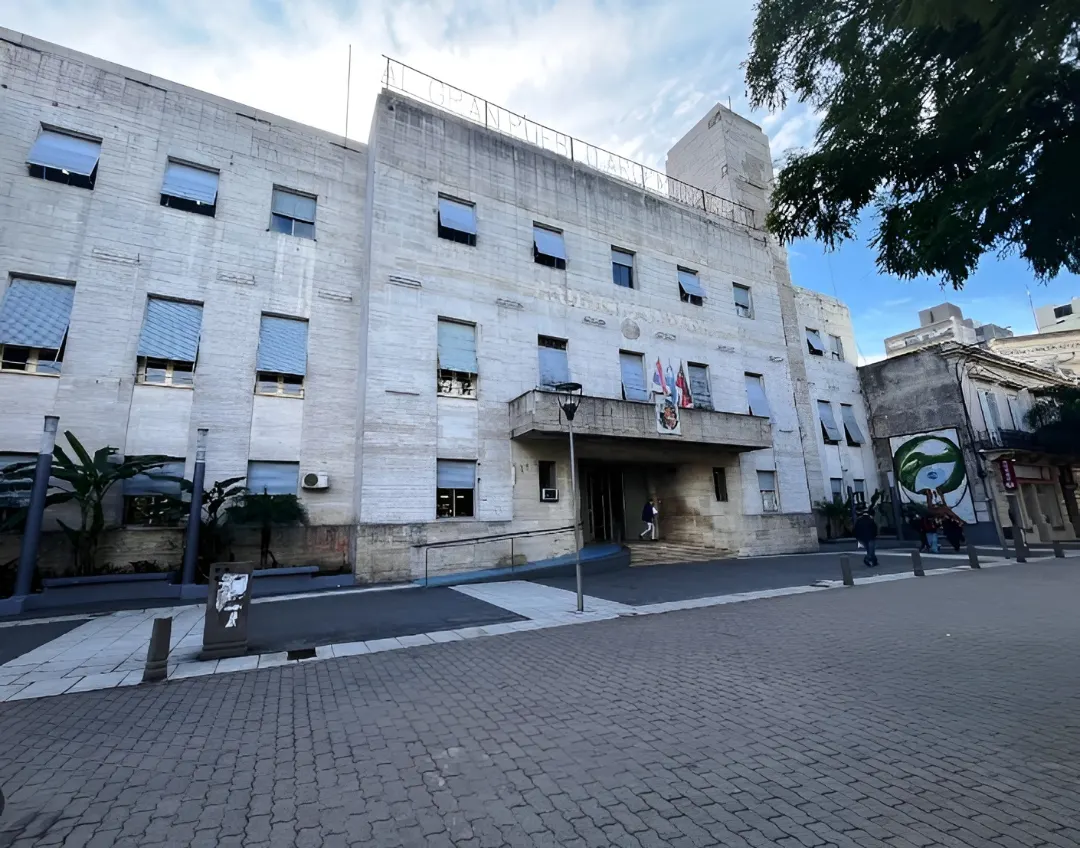
In response to a request made by the National Technological University (UTN) of Concordia and its students through the Participatory Budget, this morning Mayor Francisco Azcué delivered an Automated External Defibrillator (AED) to the institution, which was received by the Dean, Eng. José Jorge Penco, and the Academic Secretary, Fabián Avid.
Present were the Undersecretary of Development and Entrepreneurship, Gabriel Enguelberg; the Director of Citizen Participation, José Vedoya; and the Director of Employment, Juan Manuel Scarzello.
Mayor Azcué underscored the importance of this delivery, stating that “the Participatory Budget is a tool that allows residents, in this case the UTN educational community, to decide on projects that impact their environment. This AED is an important step to improve the safety and protection of all students, teachers, and staff.”
In that sense, he affirmed that the action “has nothing to do with competencies, although obviously everyone has to do what corresponds to them, but we believe that education is the most important tool for transformation, so everything we can do to contribute to improving it, to help this university continue to grow, we will do.”
ACKNOWLEDGMENT
For his part, engineer Penco highlighted the importance of having the device. “It is a management effort that we had been trying to carry out for a long time with our Social Action Directorate, but due to a cost issue, it had been postponed,” he added.
The dean thanked the Municipality since, through the Participatory Budget program, “it offered us this possibility, which we gladly accepted because for us it is a very important tool.”
He argued that “we have a building that is accessed by many people, in the morning, afternoon, and at night, including teachers, students, and non-teaching staff, and it is very important to have a tool of this type,” adding that the next step will be to train all staff to make correct use of it, in case it is necessary.
For his part, José Vedoya, Director of Citizen Participation, noted: “We are committed to providing responses to the needs of our institutions and to strengthening health and safety in every space.”
This delivery reinforces the commitment of the Municipality of Concordia to the safety and well-being of the university community and is one more example of the active collaboration between the municipality and the city's educational institutions.