
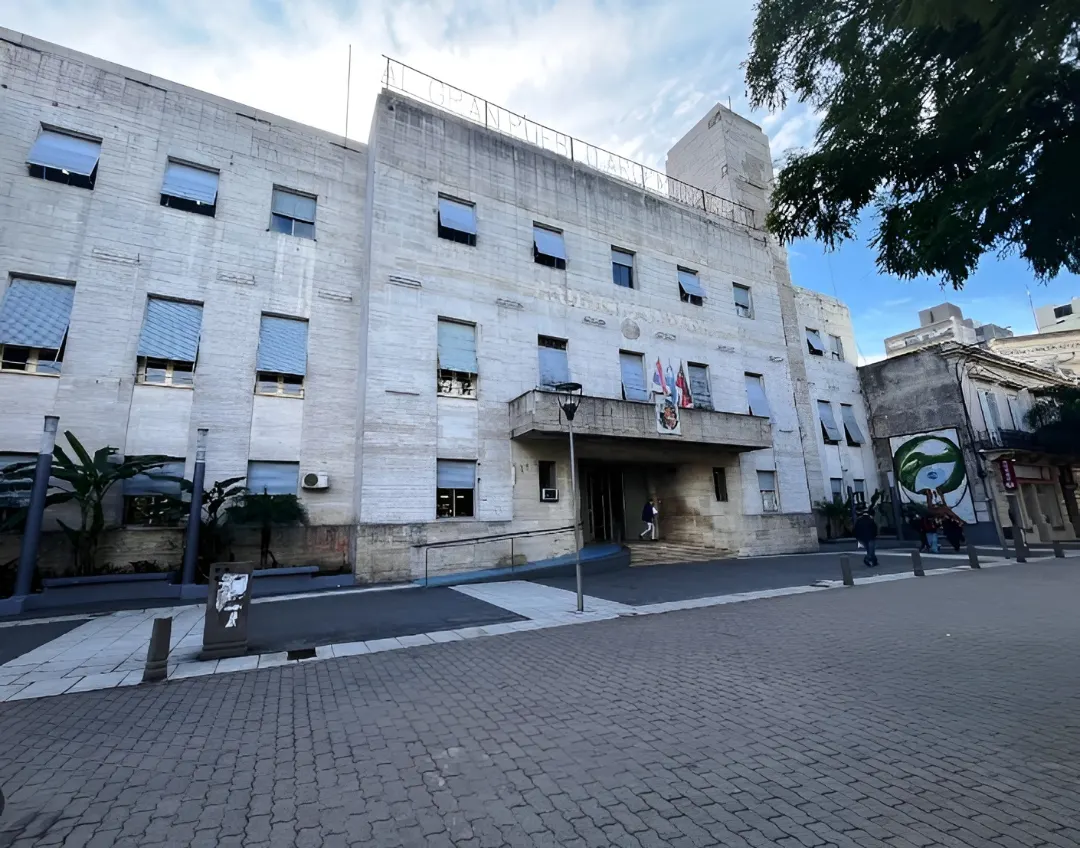
Mayor Francisco Azcué participated this past Friday night in the presentation of the book “Swiss immigration in Argentina. Vindication of an open-air epic” by Professor Carlos Pralong. The work contributes to the historical recovery of the pioneering organized Swiss immigration in our country, which took place in the prelude to the National Immigration Law of 1876.
Present at the location were the Ambassador of Switzerland to Argentina, Hans-Rüedi Bortis, representatives of the Federation of Swiss Associations of the Argentine Republic, and the vice-mayor Magdalena Reta de Urquiza, among others.
In his remarks, Mayor Azcué emphasized the importance of the work, noting that “today more than ever it is necessary to review, as you did with great precision and clarity, how this country became great. How our province and this city became a thriving, orderly city, a land of opportunity, and became the city of progress. And undoubtedly, the immigrant culture, or those values brought by our ancestors who populated this country, who worked the land of Entre Ríos, who populated our Concordia soil, are the values we need to move this country forward.”
For his part, the author of the book expressed his surprise at the support received during the presentation: “I did not think we would reach a moment like this, with so much activity, and the support I have been given here, especially by the Swiss Association of Concordia, for something I considered simple, straightforward, which is addressing the subject of immigration, especially of immigrants of Swiss origin, because that is where we come from.”
Regarding the content of the work, he specified that people who read the book will find an evocation of what the work of the Swiss in Argentina has been: “It has been very strong, very great, because when the Swiss arrived in 1856, as a detail, Argentina imported wheat from the United States and other things. A little later, 18 years later, the first shipments, the first 4,500 tons of wheat, left from the Swiss colonies from the port of Rosario to Europe, and they came from the colonies of Swiss origin. And that was the foundation for Argentina to later become the breadbasket of the world.”
And he highlighted the importance of keeping it in mind as a vindication, because the settlers do not appear in history as the actors of that great production. “It is truly a model of work, honesty, and self-improvement. Because they came burdened with the pain of the immigration of that time; to come from Europe took more than 60 days and they arrived practically in the solitude of the pampa. And yet they turned that around with great nobility and provided the foundation for Argentina to be what it was, the breadbasket of the world,” he summarized.
Present were the Director of Education of the Municipality, Carlos Gatto; council members Felipe Sastre, Mauricio Rey, and Verónica Del Boca, as well as members of the Swiss community in Concordia and the general public.