
“We are living in a moment in which we must know how to take care of and manage resources with great austerity, and having predictability in spending also requires a lot of study, a lot of work, and I want to highlight that this budget has that virtue,” remarked Azcué.
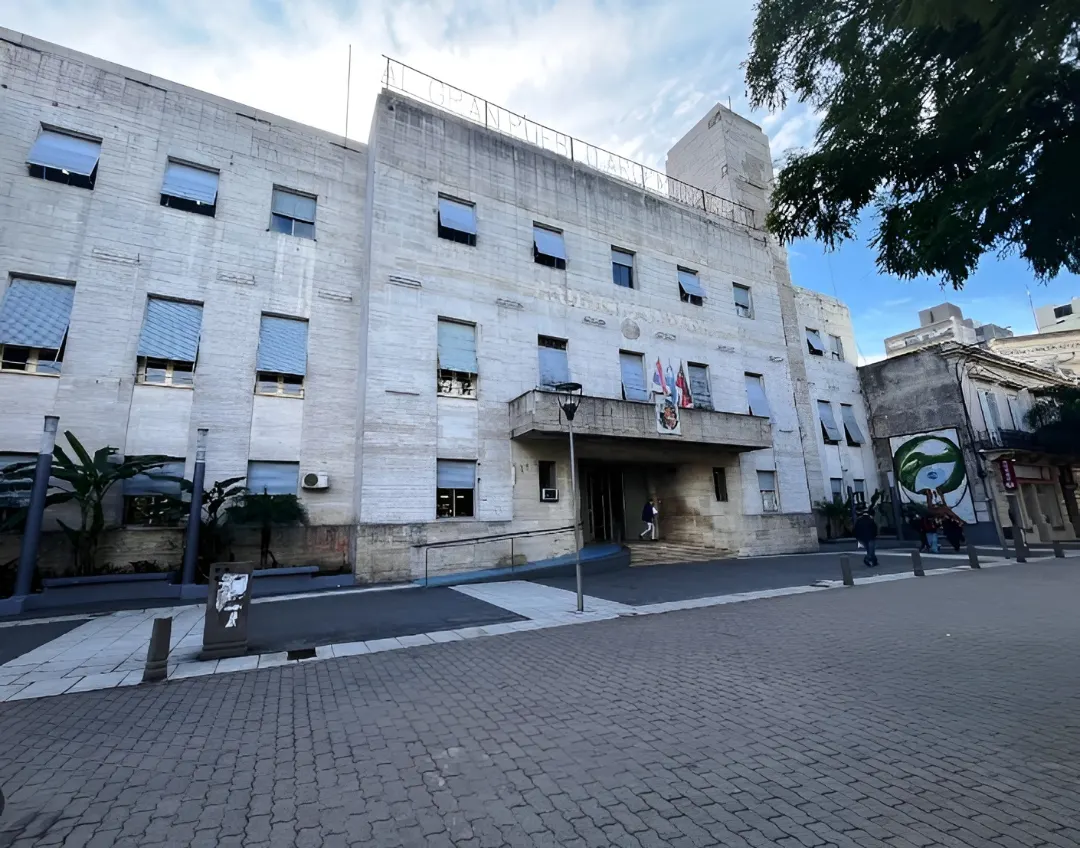
On Wednesday morning, in compliance with the terms established by the Organic Law of Municipalities No. 10.027 and its amendment by Law No. 10.826, the Mayor Francisco Azcué, accompanied by the Secretary of Cabinet Coordination and Treasury Pablo Ferreyra, delivered to the President of the Deliberative Council Magdalena Reta de Urquiza the draft Ordinance of the General Budget of the Municipal Administration for the 2025 Fiscal Year. Council members from the three blocs that make up the local deliberative body were present.
The 2025 Budget Project is based on the public policies that this Municipal Government considers essential for the development of the city, within the framework of the government plan submitted for the consideration of society at the end of 2023, which is supported by three pillars: human development, productive development, and institutional order.
Taking into account the decrease in real terms of income during the current fiscal year, especially the discretionary transfers from the provincial and national government intended for investment in capital goods and public works, aggravated by the impact of inflation in recent years, measures have been taken to rationalize spending, reorienting public resources to higher priority activities.
ZERO-BASED
To determine the expenses of the 2025 budget, the zero-based budgeting methodology has been applied, which, unlike the incremental technique, consisting of taking the previous year's budget as a reference, starts from the assumption that no budgetary expense has an acquired right to exist in the following fiscal year, which requires that each area evaluate its activities from scratch based on objectives, plan them, and justify each budget expense.
The zero-based budgeting methodology implies the participation of all hierarchical managers of the municipality, minimizes costs by detecting the duplication of activities, and contributes to the control of public spending and planning, since it forces all areas of the municipality to carry out a detailed analysis of the activities they carry out, in order to then adopt the best decisions.
PREPARATION PROCESS
The budget preparation process was guided by two key goals:
Adoption of a new chart of accounts: This plan had to be flexible and capable of responding to the present and future demands of the Municipality, facilitating the management of resources efficiently.
Preparation of a zero-based budget: This with the aim of avoiding distortions caused by inflation and ensuring that each expense was evaluated based on its current need, instead of being a simple extension of previous budgets.
To ensure a correct implementation of the new methodology and its understanding by all areas of the Municipality, two rounds of training were carried out:
Directed at administrative managers: In this instance, the new methodology, the use of the chart of accounts, and the procedures for preparing budget requests were explained in detail. The managers of each administrative area were instructed on how to articulate expenses with the purposes and functions defined by the Budget Directorate.
In addition to the aspects mentioned in the first training, emphasis was placed on defining the results expected by each area, considering both immediate and long-term objectives. This training also served to align operational objectives with the strategic objectives of the Municipality.
The combination of adopting the new chart of accounts and the zero-based budgeting methodology will allow the Municipality not only to improve transparency and efficiency in the allocation of resources, but also to establish a more rigorous financial control framework.
Regarding the calculation of budget resources for the coming year, the objective was to establish a criterion of prudence to avoid executing expenses above revenue, thus guaranteeing the fiscal balance set by the Organic Law of Municipalities of Entre Ríos No. 10.027 and the National Fiscal Responsibility Law No. 25.917, to which the municipality of Concordia has adhered by Ordinance No. 33.083.
In summary, this Executive Department, through its competent areas, prepared a prudent budget based on the forecasts of the provincial government, on the macroeconomic indicators estimated by the national government, on the municipality's own area estimates, and on the analysis of the behavior of income and expenses during the January-September/24 period, information that arises from the monthly publications uploaded on the official website of the municipality.
The government plan that is intended to be executed through the 2025 budget will demand the sum of eighty-nine billion five hundred million pesos ($ 89,500,000,000.00), representing an approximate growth in real terms of 20% with respect to the revenue expected for the 2024 fiscal year.
RESPONSIBILITY, PREDICTABILITY, AND WORK
In this regard, Mayor Azcué maintained that “it is a project that has taken a lot of work, and in this, I want to highlight the work of the Treasury Secretariat, all the areas of the municipality, and the Deliberative Council,” adding that “it has been a budget that has been prepared with another methodology, with a zero base. That is, it did not start from what we already had and add inflation, but rather the public policies that we are going to develop in 2025 were taken, and based on that, this budget was put together with great responsibility.”
Azcué remarked that “we are living in a moment in which we must know how to take care of and manage resources with great austerity, and having predictability in spending also requires a lot of study, a lot of work, and I want to highlight that this budget has that virtue.”
INSTITUTIONAL QUALITY LEAP
For his part, the Secretary of Cabinet Coordination and Treasury Pablo Ferreyra stated that “it must be noted that there is an institutional quality leap in terms of professionalization and the quality of public administration management, which is one of the pillars of this administration. That required a stage of several months of work, coordination, and communication between the different areas of government with this new zero-based methodology that was implemented.”
In this context, “we have to be, as a government team, increasingly solid and professional, with the incorporation of technology, new work methodologies, creativity, audacity, and responsibility for resources in order to carry out and responsibly execute the government program for the next year.”
STEPS TO FOLLOW
Finally, the President of the Deliberative Council Magdalena Reta de Urquiza referred to the steps to follow once the presentation was made, pointing out that the first step is to digitize the project, “remaining available for its evaluation in the Council in Commission where all council members can access it. There we are going to start working with the commitment we have from the Executive that each area will come to clear up any doubts that the council members might raise. We believe that we are going to do well and that in the month of November this budget will surely be approved.”